Gauntlet AI Released
Math Invaders
An arcade-style math fluency game where arithmetic problems descend as invaders and players type the answer to destroy them, built to launch from a learning platform and stream learning analytics.
- Problem
- Timed arithmetic practice is easy to make dull. The goal was an arcade game that builds mental-math fluency and can be launched from a school's learning platform without storing student data.
- Role
- Solo developer
- Stack
-
- JavaScript
- HTML5 Canvas
- CSS
- Node.js
- Caliper Analytics
- OneRoster SSO
- Outcome
- A browser game on HTML5 Canvas and vanilla JavaScript with grade-banded problem generation, color-coded difficulty and multi-step boss problems, answer targeting, in-session adaptation, SSO sign-in, and Caliper 1.2 analytics events sent during play.
Gallery
Overview
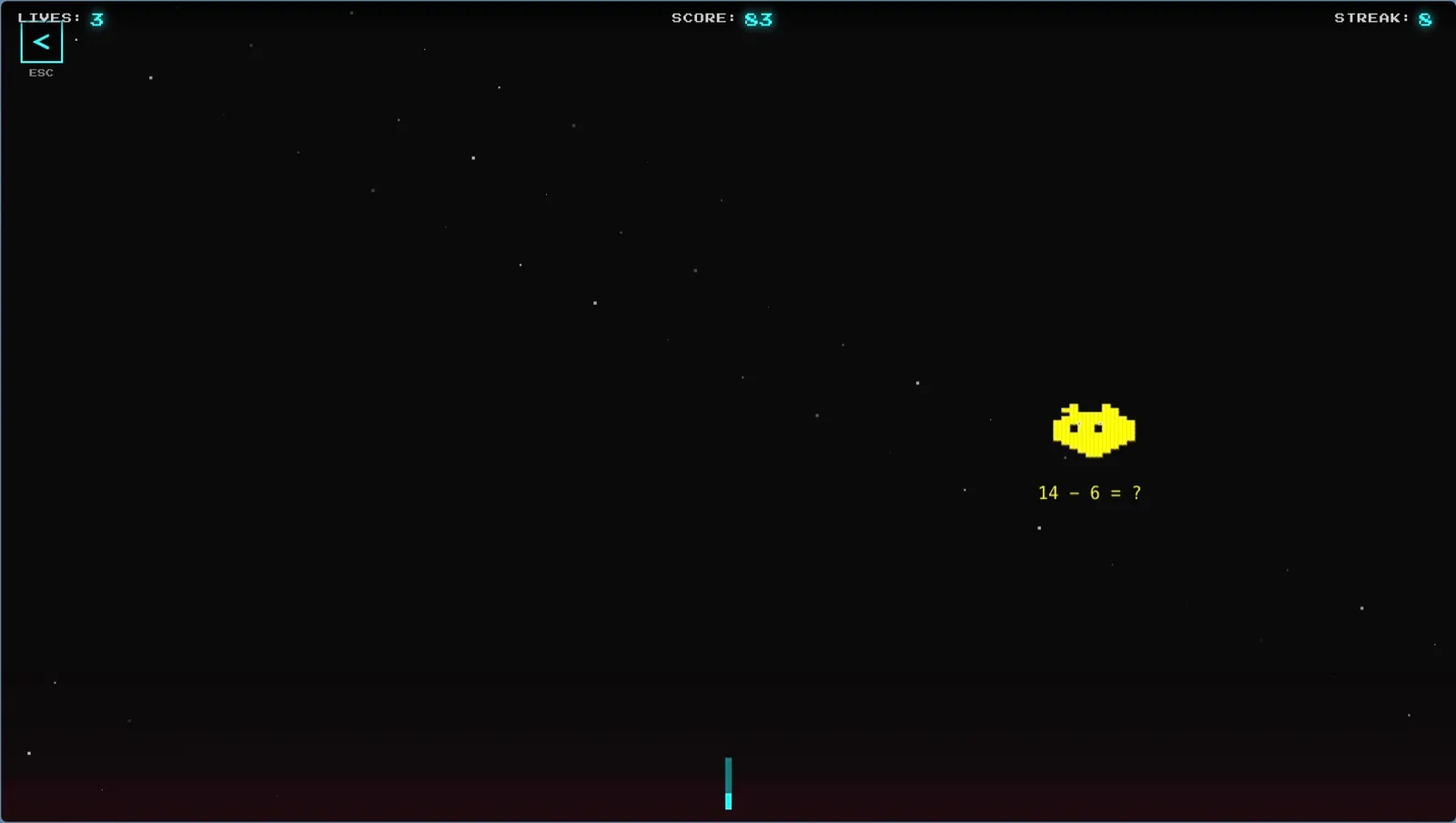
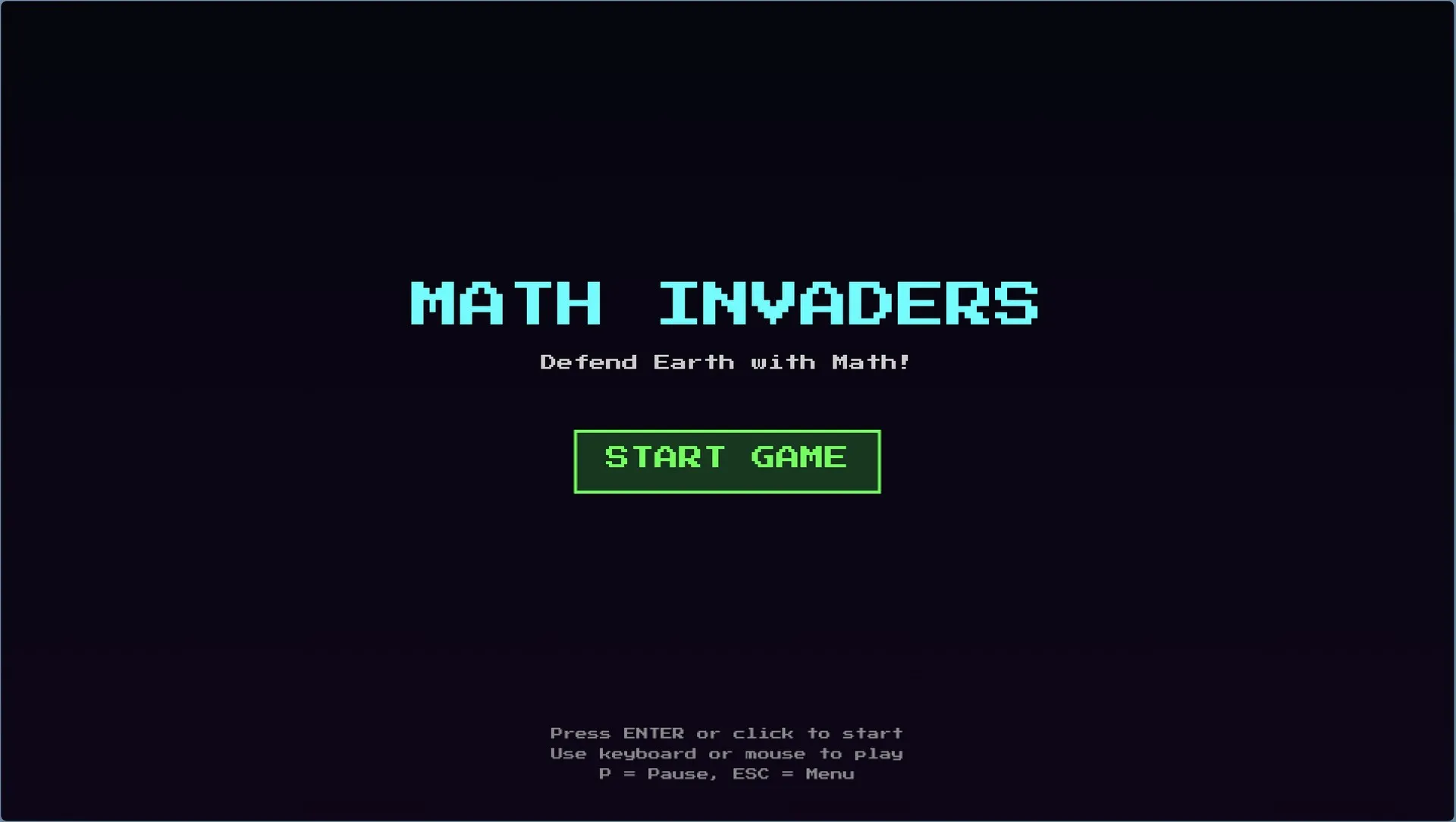
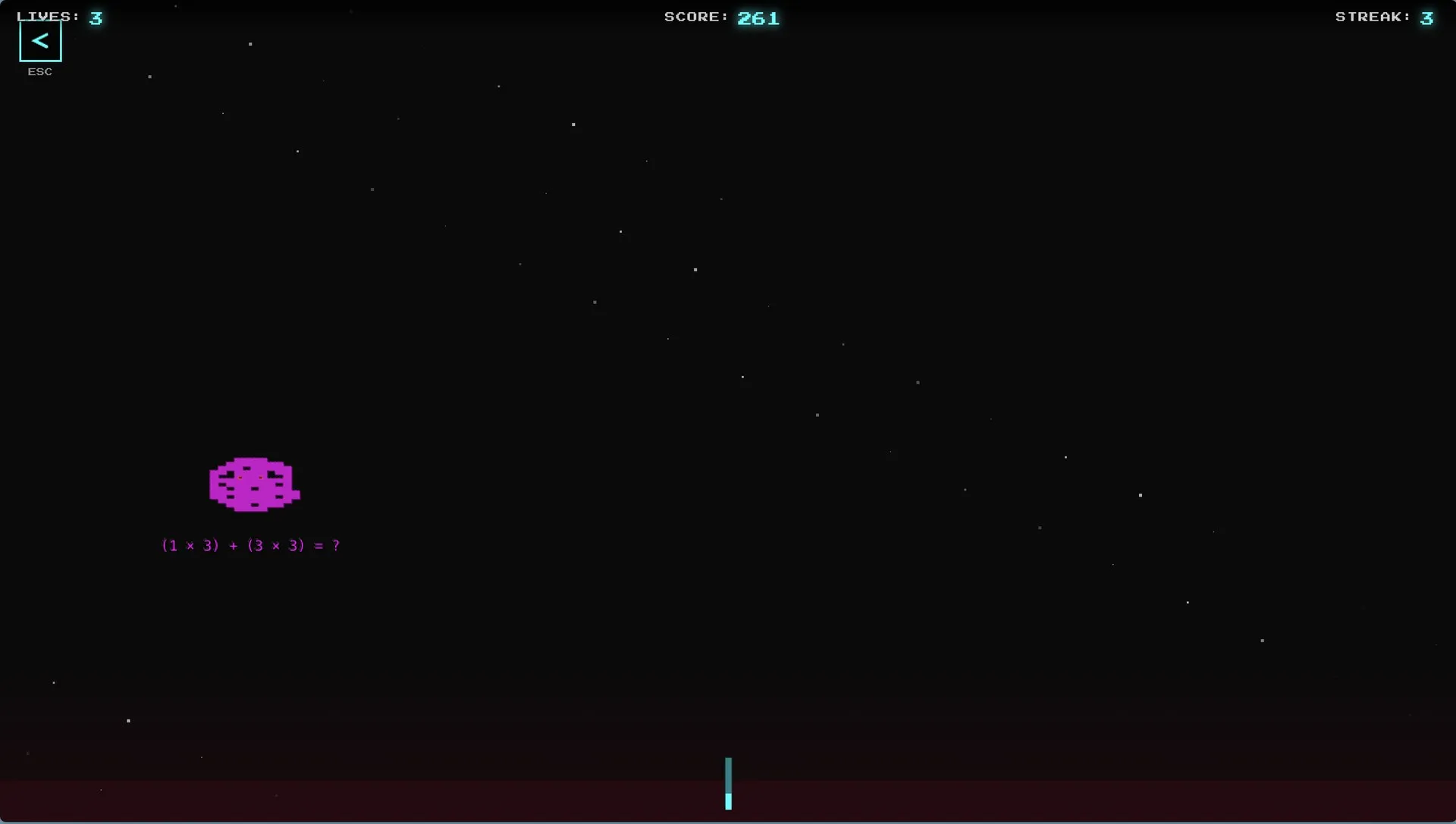
Math Invaders is an arcade-style educational game in the spirit of classic space shooters. Math problems such as 7 × 8 or 15 - 7 descend from the top of the screen as invaders, and the player types the answer to destroy the matching invader before it reaches the bottom. It is designed as a stateless game launched from a learning management system: the launch provides the player’s context, gameplay events stream out as learning analytics, and no student data is stored by the game.
Game Design
Core Loop
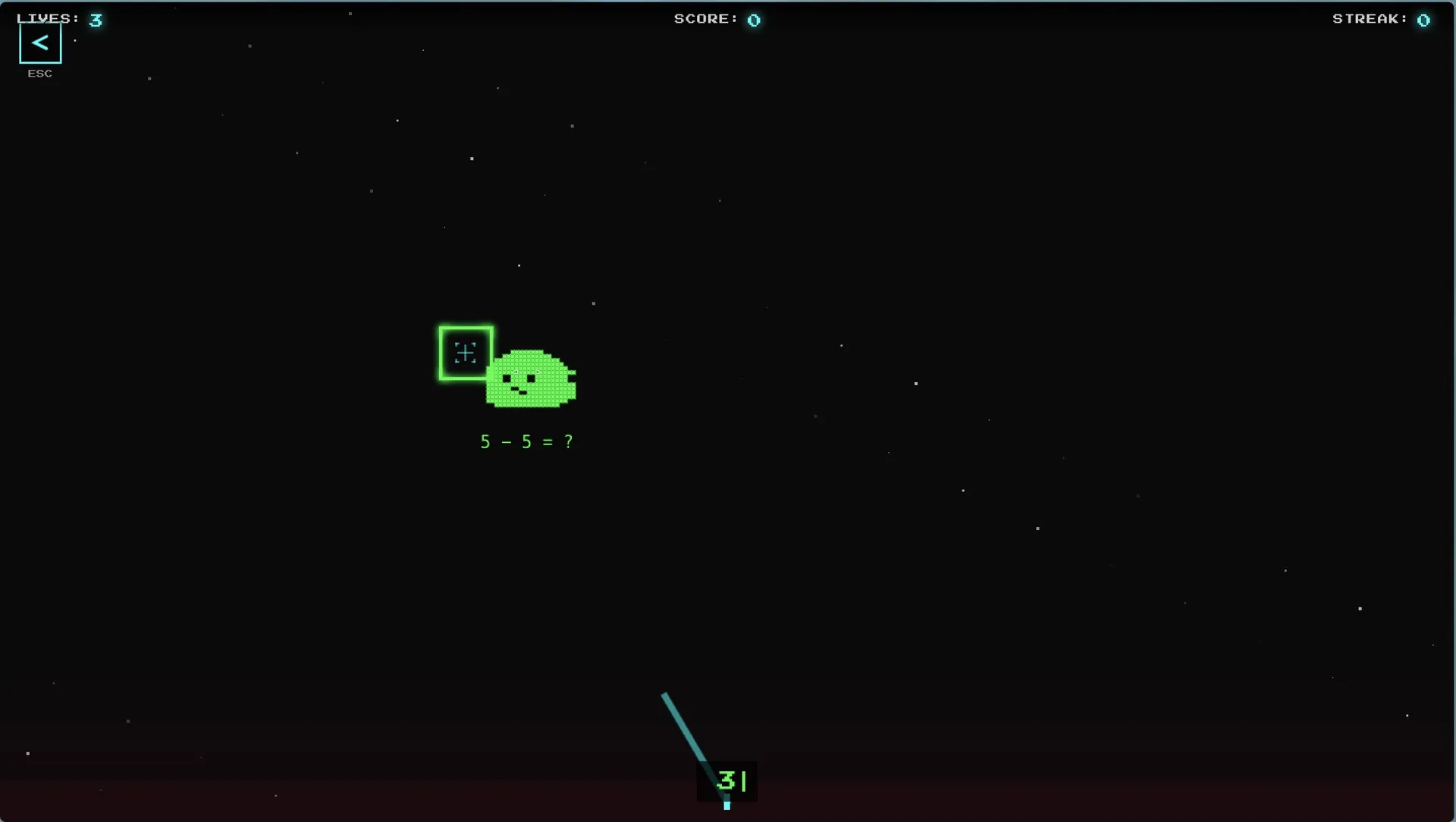
- Type to shoot: Entering a correct answer destroys the matching invader
- Lives: Three lives per session; an invader that reaches the bottom costs one
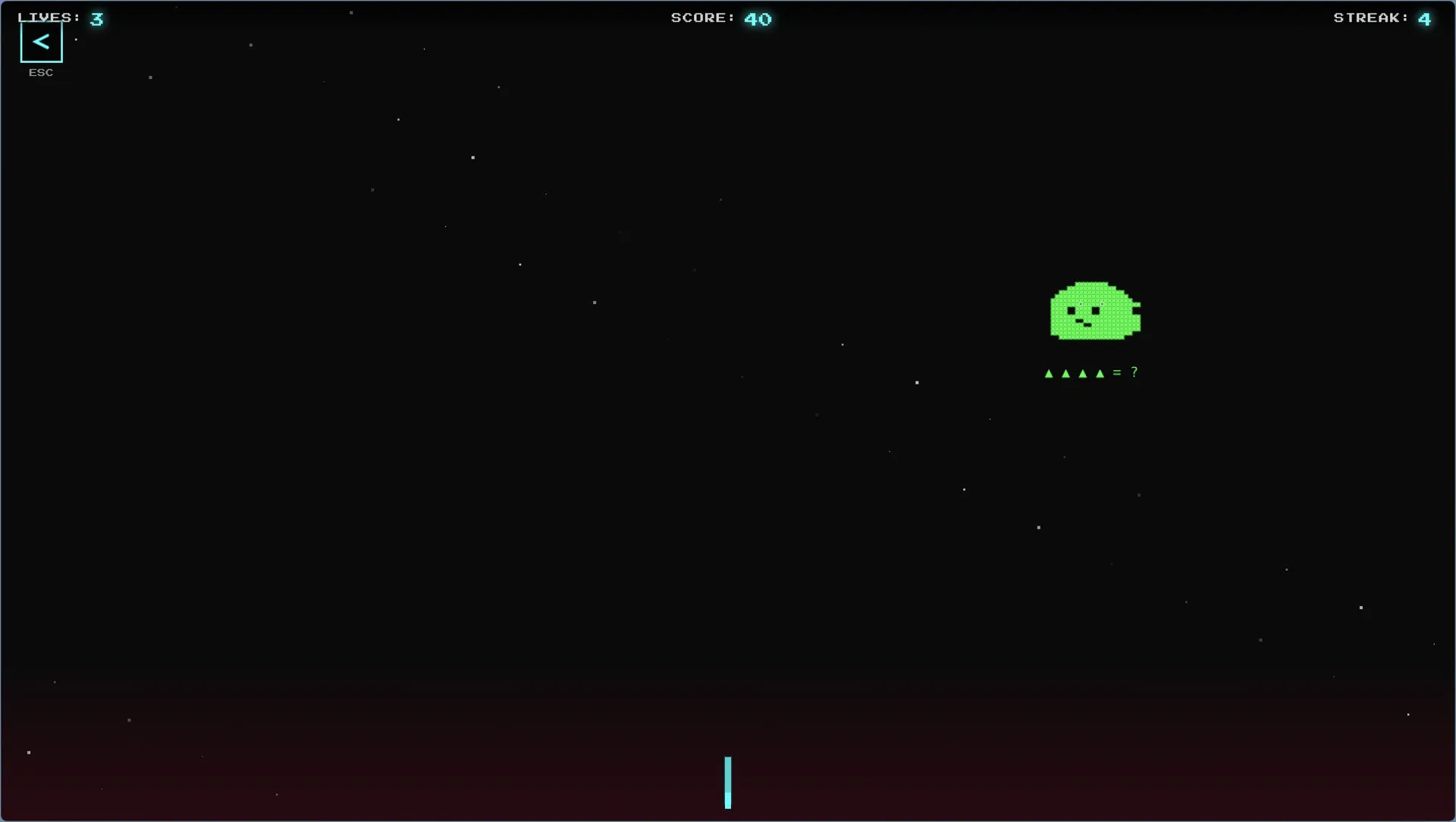
- Streaks: Consecutive correct answers build a session streak shown in the HUD
Difficulty You Can Read at a Glance
- Green: Grade-appropriate problems
- Yellow: Larger numbers, same operations
- Red: Challenging numbers, same operations
- Purple: Multi-step “boss” problems built from grade-level operations
Targeting and Feedback
- Default targeting highlights the invader closest to the bottom that matches the typed answer
- Manual selection lets the player click an invader to target it
- Proximity effects make invaders pulse as they approach the danger zone, with destruction effects that vary by difficulty
Curriculum-Based Problem Generation
Problems are generated from grade bands, from subitizing and addition/subtraction within 10 in early grades up to multiplication and division facts through 12 × 12 and multi-step problems in later grades. An adaptation engine tracks accuracy and response time during the session and adjusts number ranges and complexity as the player goes.
Technical Implementation
- Rendering: HTML5 Canvas with vanilla JavaScript, a retro 8-bit visual style, and a typography manager for pixel-font legibility
- Engine: Custom game loop with object pooling, a quadtree for spatial queries, and a particle system for effects
- Launch context: URL-parameter parsing and validation for the learning-platform launch
- Authentication: SSO sign-in through the learning platform’s OneRoster-based identity service, with grade level drawn from roster data
- Analytics: Caliper 1.2 session, assessment, and assessment-item events sent in real time during play
- Dev server: Small Node.js static server for local runs
Scope Notes
The design document also describes practice, speed-challenge, and mixed-review modes. The implemented game ships the standard mode.